image
image

According to Smoky

Welcome to According to Smoky. Here you will find the latest and greatest from C. Clark "Smoky" Hale notable 'baster', author, publisher, television star in both the barbecue and 'the real' world. And yes, he is a real person and not the webmaster

Smoky will be offering his talents, techniques and secrets discovered over the last 150 years, or so. He will be to the point, pull no punches and if you suffer through the process, you will become a much better outdoor cook, turning out masterpiece meals for friends and family alike.

In this column, Smoky donned his mask and fins and has been slipping around on the ocean floor in search of just the right meat to grill . . . . . take notes!

So, with no further adieu, we turn the mike to Smoky. You're on Smoky . . . . .


Thanks PC,

OUTDOOR COOKING WITH SMOKY HALE

Building A Better Brisket

By: Smoky Hale

Julius Caesar is credited with writing, during his foray into Gaul, "Omni bovi est divisi in tres partes." Translated, that reads, "All the cow is divided into three parts."

While he did not elucidate, anyone reasonably familiar with a cow carcass will understand clearly that the front end of a cow is made for roping, the hind end is for branding and the middle part is for cooking on a grill.

The brisket comes from the roping part.
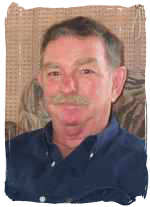
Smoky HaleBrisket, corned, cured, simmered with proper seasonings and sliced thinly across the grain is magnificent as the essential basis for a Reuben sandwich and, thus prepared, has also brought comfort and sustenance to multitudes as the prime constituent of corned beef hash. But, only those severely challenged would twice try to cook a brisket on a grill.

Inherent kindness precludes my further characterizing ‘challenged.' The discerning will note that I did not modify challenged with ‘intellectually' or ‘gastronomically.' However challenged, Texans seem to consider barbecuing brisket over mesquite weed as a test of manhood.

Many have wondered how, in the bastion of beefdom, this tough, stringy candidate for the corning crock came to be so revered. My personal opinion is that, in the distant past, creative Texans, looking to find some use for two eminently discardable items, started trying to sell tenderfeet and pilgrims on the idea of cooking the unmarketable brisket with the noxious weed mesquite, thereby ridding the state of two undesirables. Gullible Yankees, reared on boiled dinners and lacking a basis for comparison, considered it edible and began to call for it when they came to town. Texans, therefore, were forced into actually using the dubious duo. As the pits were passed to new generations, rendering a brisket edible became a rite of passage: a challenge that could not be refused.

In any case, since this doubtful dish has become almost as widespread as kudzu, I am compelled to discuss how to make the most out of a bad situation. I barbecued my first whole beef about 50 years ago. As I recall, even the short ribs were eaten before the brisket.

Bob Lyon, Sage of the Sasquatch, retired from teaching English and reclaimed his youth in outdoor cooking. Debuting in a chili contest in Terlingua, TX, he discovered barbecue. He went back home to Seattle and co-founded the Pacific Northwest Barbecue Association, which he serves as executive secretary and, among other activities, is the Pacific Northwest correspondent for the Kansas City Barbeque Society.

He became intrigued, fixated even, on the ritual of the brisket. He even challenged the Commissioner of the International Barbecue Society, hill country resident, John Raven, to a brisket ‘mano a mano' in Terlingua. Bob says, "Every brisket is an adventure."

Bob's cooking team, Beaver Castors, has competed and won in national and international cooking contests. Jim Erickson, chief cook of the Beaver Castors, has won first place in several prestigious state and international contests in brisket - using borrowed grills. He attributes his successes to choosing the brisket, using good technique and cooking several to choose from.

Choosing the Better Brisket

The brisket comes from the chest/breast area of a cow - the roping end. It is two alternating layers of muscle and fat. The two layers of meat are separate, but not equal: one is thicker and wider. Observed with the fat layer on the bottom, the upper layer of meat is interspersed with strings of fat which do not render out during cooking. In restaurants, this layer is normally chopped with a little of the trimmings of the lower layer for chopped sandwiches. The lower layer, although less fatty, also has streaks of fat - the size and shape of which offer some indication of how it will cook. Thick, ropy strands of marbling will probably yield a tougher product from a cut already fabled for toughness. Choose instead, briskets with more slender, consistent streaks of marbling fat.

There seems to be a consensus that, all things being equal, flexibility is an indication of potential for tenderness. The exercise goes this way: Pick up the brisket, grasping it in the center. The more the ends droop, the more tender it is likely to be. Remember that tenderness, in the case of brisket, is a relative term. Do not for one moment, delude yourself into thinking that a limber brisket is a tender brisket. Compare briskets of similar size and temperature for the closest approximation of accuracy. Don't bet the ranch on any of them.

Jim Erickson rightfully points out, "Don't pay extra for prime grade." Prime only means that there is more fat marbled in. The brisket is already overly endowed with interspersed fat. Jim does advocate using a ‘certified' beef and his success lends credence to that belief. Charlie McMurrey, Jr., pitmaster as well as web master of Barbecue'n On The Internet, believes that buying at a butcher shop rather than a supermarket gives him an edge in finding a less tough brisket.

If you are serious, which is in itself a fault and likely to make the meat tougher, get more than one brisket. After they are done, choose the most tender for contests and guests whom you wish to impress. You can chop the other for sandwiches or grease the axles on the chuck wagon.

The shape of the brisket is more an indicator of cooking time than weight. A chunky 8 lb. brisket 5" thick will take longer to cook than a long, slender 10 pounder. Select a 10-12 pounder with a good ½" minimum layer of fat on the bottom side.

Preparation

Remember, "Each brisket is an adventure." After you have selected what appears to be the best available, it's trimming time. Trim the hump of fat from the pointy, ‘nose' end. This side will be on the bottom during cooking; the external fat will not do any basting and may actually interfere with seasoning. Don't bother with the fat layer on the other side. Tidy up by trimming off the thinnest parts and trim the fat off the sides.

Bring to meat to room temperature, regardless of what the beef people's representatives say. The meat will absorb flavor more readily and it will reduce the cooking time. Check the internal temperature and record it in the rare chance that you may want to do this again.

"Aye, there's the rub.."

There is much ado about rubs. (It's hard to get away from Billy Bob Shakespeare when you write about grilling.) A rub is just a mixture of seasonings and has much less influence on the final result than rub club rooters would admit - even if they knew.

Seasoning for any meat should complement the meat's natural flavor, not over power it. We value meat, as the price reflects, for its taste and texture as well as a prime source of protein. It is illogical, therefore, to over season, over smoke and over cook. Of course, it is difficult to overcook the brisket.

I am amazed at the range of ingredients considered to be proper for a brisket rub. Salt is an essential ingredient because it serves as a conductor of flavors. Salt enters the meat by osmosis and can carry along certain flavors, but no externally administered flavors will penetrate very far into the meat - especially through that layer of fat. Chili powder, cumin and oregano are, in my opinion, more aptly used in chili and other Southwestern dishes. Sugar belongs in the dessert course and only a sissy would use a tenderizer.

Over the years, I have found a simple mixture that seems to bring out the best in beef without any off notes of taste and it doesn't over power the beef flavor.

Mix thoroughly: one c. salt, 1/4 c. each garlic and onion powder, 1/8 c. each ground thyme, ground bay, black pepper, celery seed and Hungarian paprika. Spanish paprika has only color. Overloading with paprika and overcooking paprika will create a bitter after taste. Using it as you would for proper saltiness, rub this into the brisket a few minutes before it goes on the grill. Use this as a starter and build your own to suit your taste.

When a rub with salt as a significant ingredient is put on meat, the salt begins to draw moisture from it. That's why salt is used in curing processes. Moisture is very important in the cooking mechanism. Water conducts heat much more readily than dry tissue. It follows, therefore, that the longer you can retain moisture in the meat, the quicker the heat will be conducted from the exterior to the interior. Getting the inside done before the outside is burnt to a brick like texture is the secret to successful barbecuing.

ACT III

Cooking a brisket is a long term relationship. Producing a better brisket requires 8-18 hours at consistent temperature with minimal smoke exposure. You can roast a brisket at 350 degrees in a couple of hours, but the result would challenge a pit bull's jaw muscles. Cooking temperatures in the 200-215 degree range are most likely to bring a brisket to its optimum potential. This is the traditional range for barbecuing that is a result of centuries of trial and error. Brisket would actually be more tender if cooked at below 200 degrees, but the time on the grill goes up drastically.

Smoke blowers need to comprehend that a little smoke applied over 10-12 hours accumulates to an excess. There are only two fuels for properly barbecuing a brisket: wood coals and charcoal. Flaming wood produces tars, phenols, cresols and other noxious products. For a century, until EPA banned it, cresol was the active ingredient in sheep dip. It is my studied opinion that anyone who can tolerate to eat over smoked meat probably has some sheep herder in his ancestry. Only confirmed Lysol freaks would enjoy the phenol flavor. Both cresols and phenols are known carcinogens.

Those who have cooked, burning wood in offset firebox, may have, unwittingly, been saved by the placement of the exhaust vent. Where the vent exits from the top of the cooking chamber, the hottest gasses go out first. The meat, resting on the grill below, doesn't get as contaminated with the vile products of combustion.

Don't sweat the ‘smoke ring.' The ring of color grading from dark on the outside to a pale pink deeper into the meat is not really a smoke ring at all. It is a chemical reaction of meat's constituents. The depth of color depends more upon the moisture of the meat than upon the density of smoke. It has no bearing on flavor and is only important to smoke blowers. Next time you eat Chinese, check the "smoke" ring on the roast pork which has never even had a passing flirtation with real smoke.

Build a proper bed of coal by burning down sufficient wood or charcoal to bring the whole grill up to 350 degrees, then shut down the air intake to reduce the temperature down to 225. Put on the briskets, fat side up and close the lid. Check in 20 minutes to see if the temperature has stabilized around 210. If it hasn't make adjustments in the air intake. If it has, go find something interesting to do.

How often you need to check the grill depends on the grill. If you are working with a small kettle grill, you may need to replenish the coals and move the brisket frequently. If you have properly heated and stoked a massive iron sidewinder, it may maintain its temperature for four hours and will require less frequent, if any, turning.

Did you say, "What about the water pan?" Tell me that you are joking! A water pan in a closed grill is, at a minimum, a gross waste of fuel. It takes more heat to boil a gallon of water than it does to cook a 10 lb. roast to 185 degrees. And what do you get in return, "Nothing of value." The water pan was introduced by manufacturers of dinky little tin can cookers, without air flow control, as a means of controlling the temperature. As long as there is water in the pan, the temperature will not exceed the boiling point of water. It is only useful for those who cannot control the temperature of their grill. Grilling is cooking meat in dry heat. Water has no place in grilling.

We may as well discuss that other grilling abomination, aluminum foil. Anybody who cooks his brisket wrapped in aluminum foil, probably puts catsup on his steak. - after he has cooked it ‘well done'! At barbecue cook-offs in other parts of the country, aluminum foil is known as the ‘Texas crutch.' Aluminum foil is a crutch for those who over smoke and over cook at temperatures too high. By hermetically sealing the damaged goods in aluminum foil, the abused brisket is braised (cooked enclosed with moisture) to try to retain moisture and tenderness. Is this grilling? Certainly not! What, other than the thickness of the container, is the difference in heavy duty aluminum foil and a pressure cooker.

This bit of chicanery is now euphemized among its practitioners as ‘steeping.' Maybe they should call it ‘Texas tea" and bring out the doilies and crumpets! To the experienced taster, braised brisket has the same texture as pot roast and loses much of its natural flavor. I find nothing wrong, however, with a back yard barbecuer wrapping his completely cooked brisket in aluminum foil to hold it until serving time.

After about 8 hours, check the internal temperature of the briskets with a bimetal thermometer. Most beef is edible after 125 degrees - for a fine steak - but the troublesome brisket needs to get as close to 185 degrees and you can stand. At that temperature, most of the interspersed fat has melted and mellowed the surrounding tissue into a reasonable facsimile of tenderness. Paul Kirk, Baron of Barbeque, teaches grilling around the country side. He says that he tests for tenderness by inserting his thermometer probe laterally into the brisket. If it enters and exits easily, he considers it ready to remove.

The Finale

Even after the extra effort in selection, the trimming and seasoning and the long term cooking process, the brisket demands still more than any rational fare for the grill. It still must be sliced in a particularly peculiar fashion in order to be rendered edible.

I am no slouch with a blade, but when I watched Texas native, Charlie McMurrey, Jr., dissect a brisket at a cook-off in Cookesville, TN, I recognized immediately that I was in the presence of a master brisketeer.

First, he removes the fat from the top side - that is the side that was on top during cooking. Then, starting on the flat end of the opposite side, he starts through that layer of meat, continuing slicing toward the nose end until reaching the internal layer of fat. He removes the fat separating the two layers of meat, separates and sets the top meat layer aside. The grain in this layer runs differently from the bottom layer and brisket needs to be cut across the grain to be chewable. It is instructive, at this point, to look closely at the directions of the grain.

He continues trimming and scraping away the fat. Then he places the top layer on the bottom - with the grain of both aligned. He is able, then, to slice both layers thinly across the grain. Brisket begins to dry quickly, so have everything else ready to serve.

A finishing sauce is optional. A simple one for a starting place is: 1Qt. Catsup, 6 oz prepared mustard, 3 T. Apple cider vinegar, 1/3 c. Worcestershire sauce, 3 T. Brown sugar, juice of 1 lemon, ½ lb butter, ½ t. Salt, ½ t. Black pepper, 1/4 t. Ground cloves. Simmer until well blended.

Serve with ice cold Lone Star or a hefty Burgundy.

The absolute treasure of this whole exercise is that, once you have done it, you have nothing left to prove and you never have to cook a brisket on the grill again! On, now, to the good and tender stuff! Hmm.... Rib roasts, sirloin roasts, pork loins...!!!

The Great American Barbecue & Grilling Manual
Smoky Has A New Book
The Great American Barbecue & Grilling Manual
416 pages of great information and wonderful recipes.
@ The Barbecue Store
Enjoy.

© 1998 by Smoky Hale Smoky
C. Clark Hale
8168 Hwy 98 E.
McComb, MS 39648

Hammock
Smoky's 5th basic position for really great barbecue'n.


Return to Smoky's Columns

'According to Smoky' is by C. Clark Hale
who is solely responsible for its content. Comments
should be addresses to cchale@bellsouth.net


The Barbecue Store
New Sale Items
all the time! Check out
what's hot in outdoor cooking

For all of your gas grill parts
We have a large selection of replacement parts for almost any type of gas grill

Traeger Wood Pellet Grills
Click Here to request free catalog from Traeger Wood Pellet Grills. Learn more about the benefits of using a pellet grill.

Barbecue'n Guy!Barbecue'n On The Internet has been serving millions and millions of satisfied readers every year since February 3, 1996

Smoke 'n Fire Enquirer
 

See Our Privacy
Policy Here

Sign up for our newsletter today and begin preparing better barbecue and grilling meals today. It's totally free and contains more great outdoor cooking information.


Sample Newsletter

Email address:

First name:

Last name:

Names are really important to identify you
as we give free stuff away in our newsletters!
Subscribe   Unsubscribe  
      

image
image
image